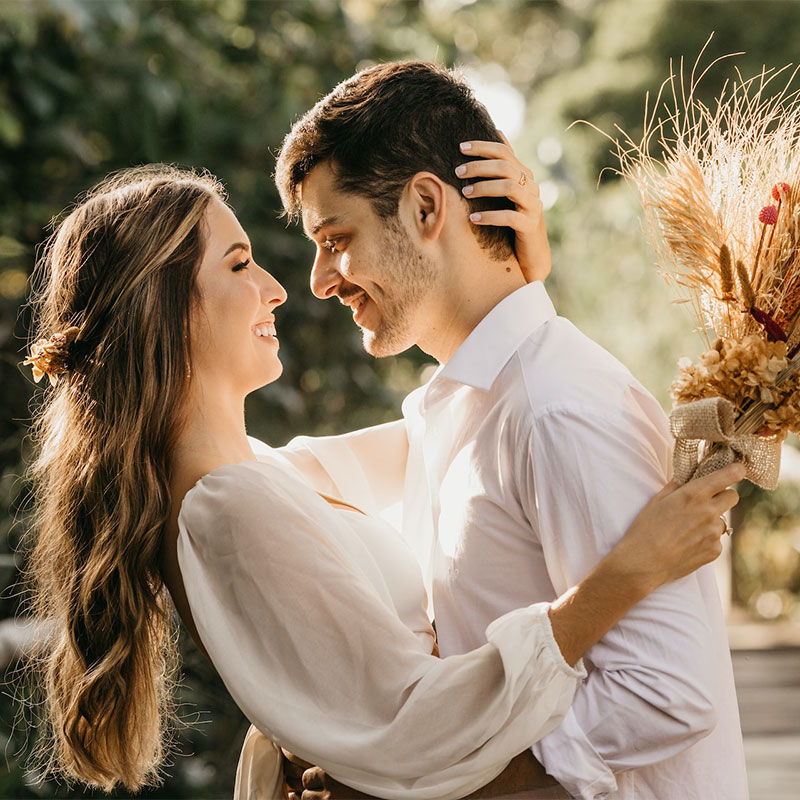

Every photographer hits the same wall at the start: you need a portfolio to get clients, and you need clients to build a portfolio. The good news is that this wall is imaginary. Nobody looking at your website knows whether an image was paid work, a styled shoot, or a Sunday afternoon experiment with a friend in a borrowed dress.
What they do notice is whether your work looks intentional. That is the whole game. This guide walks you through exactly how to build a photography portfolio from nothing, ending with a tight set of around 15 images that actually converts visitors into inquiries.
Why 15 Images Beats 150
The instinct of every beginner is to show everything. Three years of photos, five genres, every decent frame from every shoot. It feels generous. It reads as uncertain.
A portfolio is not an archive. It is an argument. You are arguing that you can reliably produce a specific kind of image for a specific kind of client. Every weak photo you include weakens that argument, because viewers judge you by your average, not your best.
Here is the brutal math most photographers avoid:
| Portfolio | Strong images | Filler images | Perceived skill level |
|---|---|---|---|
| Photographer A | 15 | 0 | Professional |
| Photographer B | 15 | 45 | Hobbyist |
Same 15 great photos. Completely different outcome. Editing down is not false modesty, it is the single highest leverage decision you will make.

Step 1: Decide Who the Portfolio Is Talking To
Before you open Lightroom, answer one question in a single sentence: who do I want to hire me?
Not “people who like photography.” Something like:
- Couples planning relaxed outdoor weddings in the countryside
- Small independent brands who need product and lifestyle shots
- Families who want documentary style sessions at home
- Musicians who need press images with attitude
Write it on a sticky note and put it on your monitor. Every image you consider from this point gets held up against it. If the photo would not help convince that person, it does not go in. This one filter removes about 70 percent of the agony of selection.
A note on “but I shoot everything”
Shooting everything is fine. Showing everything is not. You can keep a second gallery or an Instagram account for personal exploration. The main portfolio stays narrow until you are booked enough to afford being broad.
Step 2: Audit What You Already Have
Dump every photo you are even slightly proud of into one folder. Phone shots included. Old shots included. Do not filter yet, just gather.
Then do a first pass with a timer. Five seconds per image, gut reaction only:
- Yes – I would be happy for a paying client to see this
- Maybe – something works but it is not quite there
- No – move on
Most beginners end up with between 4 and 20 in the Yes pile. That is completely normal. The gap between what you have and the 15 you need is your shooting brief for the next few weeks.

Step 3: Map Your Gaps Before You Shoot Again
A portfolio needs variety within a narrow lane. If you want weddings, fifteen portraits of the same couple at the same golden hour is not a portfolio, it is one good evening.
Build a simple gap sheet. Here is an example for someone targeting documentary family work:
| Shot type needed | Have it? | How to get it |
|---|---|---|
| Wide environmental scene | No | Shoot a friend’s kitchen on a Saturday morning |
| Tight emotional detail | Yes (x2) | Keep the stronger one |
| Candid interaction between two people | No | Offer a free session to a neighbour |
| Low light indoor frame | No | Evening bath time or bedtime story shoot |
Now you are not “practising photography.” You are filling named holes. That changes everything about how productive your next shoot is.
Step 4: Shoot Personal Projects to Fill the Gaps
This is where photographers with zero clients overtake photographers who are waiting for permission. Nobody is coming to hand you a brief, so write your own.
Project ideas that produce portfolio grade work
- The styled shoot. Message a local florist, a dress shop and a makeup artist. Offer everyone free images for their own marketing. Cost to you: a few hours and a venue. This is standard practice across the wedding industry and it produces images indistinguishable from paid work.
- The trade session. Post in a local community group offering a free 45 minute session to the first three people who reply. Be honest that you are building a portfolio. People say yes constantly.
- The 30 day series. One subject, one constraint, thirty frames. “Strangers at the market.” “My street at 7am.” Constraint forces style to emerge.
- The second shooter route. Assist an established photographer. Agree in writing what you can show. Real conditions, real pressure, real images.
- Spec work for a brand you love. Buy the product, shoot it properly, show the brand. Worst case you have three strong commercial frames. Best case they hire you.
Be honest, but do not apologise
Never label an image “practice shot” or “just a test.” Present it as work. If someone asks directly whether it was a commissioned job, tell the truth. Nobody asks.
Step 5: Cut Ruthlessly Using the Three Question Test
Once you have 40 to 60 candidates, run each through three questions. An image needs a yes to all three.
- Is it technically clean? Focus, exposure, horizon, skin tones, no distracting limb growing out of a head.
- Does it say something? Emotion, light, gesture, atmosphere. A sharp boring photo is still boring.
- Does it match the sticky note? Would your ideal client see themselves in it?
Then apply the duplicate rule: if two images do the same job, kill one. Two images of the same pose, two detail shots of rings, two laughing portraits. Pick the stronger. Repetition reads as padding.
Get outside eyes on it
You cannot see your own work clearly, because you remember how hard each shot was. Show your shortlist to:
- One photographer you respect (for craft)
- One person who looks like your ideal client (for appeal)
- Nobody who loves you unconditionally (they will say everything is lovely)

Step 6: Decide How Many Photos Per Gallery
The question Google gets asked constantly is how many pictures should be in a photography portfolio. Here are working numbers used across the industry:
| Portfolio type | Image count | Notes |
|---|---|---|
| Homepage hero selection | 6 to 10 | Your absolute strongest, no exceptions |
| Main portfolio gallery | 15 to 25 | The sweet spot when starting out |
| Single story or full session gallery | 20 to 40 | Shows you can cover a whole event |
| Per category page (portraits, details, etc.) | 10 to 15 | Only split categories once you have depth |
| PDF or print portfolio for meetings | 12 to 20 | Must survive being flipped through fast |
If you only have 15 images worth showing, build a 15 image site. One page, done well. Do not create six empty category pages waiting to be filled.
Step 7: Sequence for Impact, Not Chronology
Sequencing is the most underrated skill in portfolio building. The same 15 photos in a different order can feel amateur or feel like a published book.
The rhythm that works
- Open with your single strongest image. Not your second strongest. Visitors decide in roughly three seconds whether to keep scrolling.
- Follow with two more strong frames that confirm the first was not luck.
- Vary the scale. Alternate wide, medium and tight. Three wide shots in a row flatten the energy.
- Vary the tone. Loud frame, quiet frame, loud frame. Contrast creates momentum.
- Keep the colour consistent. Variety in composition, consistency in edit. If one image is warm film tones and the next is cold and contrasty, the portfolio feels borrowed from different people.
- Close with your second strongest image. The last frame is what they carry to the contact form.
Test it on a phone
The majority of people viewing your portfolio are scrolling on a phone in bed. Preview the whole sequence vertically on a small screen. Images that looked balanced side by side on a desktop grid often collapse in a single column.
Step 8: Structure the Site So Visitors Reach the Contact Page
A portfolio that nobody can act on is a gallery wall in an empty room. The structure matters as much as the photos.
The five page site that is enough
- Home – 6 to 10 hero images, one clear line explaining what you do and where you are based, one button to the portfolio and one to contact
- Portfolio – your 15 to 25 sequenced images
- About – a photo of your face and three short paragraphs written like a human, not a brochure
- Services or Investment – what you offer and a starting price or price range
- Contact – a short form, five fields maximum
Navigation rules that increase inquiries
- Put “Contact” in the main menu and make it visually distinct. Not buried in the footer.
- Add a call to action at the end of every page. After the last portfolio image, a simple line: “Available for bookings in 2027. Tell me about your day.”
- State your location clearly. “Wedding photographer based in Lyon, shooting across France and Europe.” This serves both humans and search engines.
- Keep the form short. Name, email, date, location, a message box. Every extra field costs you inquiries.
- Compress your images. Export at around 2000px on the long edge, quality 70 to 80. A slow gallery is an unseen gallery.
- Write real alt text describing each image. It helps accessibility and it helps you show up in image search.
Where to host it
WordPress, Squarespace, Adobe Portfolio, Pixieset and Format all work. What matters far more than the platform is the editing discipline you applied in steps 5 and 6. A beautifully built site full of mediocre images converts worse than a plain site with 15 excellent ones. Avoid relying only on Instagram or a PDF, because you do not own the first and nobody shares the second.

Step 9: Review and Replace Every Quarter
Your portfolio should be a living thing. Set a recurring reminder every three months and do one job: remove the weakest image and replace it with something better.
This single habit means that twelve months from now, your portfolio contains work you had not even imagined yet. It also prevents the classic trap of a site frozen in 2024 while your actual shooting has moved on.
Track which pages visitors spend time on and where they drop off. If people reach the portfolio but never the contact page, the problem is usually the end of the sequence or a missing call to action, not the photos.
Your Two Week Action Plan
| Days | Task |
|---|---|
| 1 to 2 | Define your ideal client. Audit existing images. Build the gap sheet. |
| 3 to 9 | Run two or three personal project shoots aimed at specific gaps. |
| 10 to 11 | Edit with a consistent preset. Cut to 15. Get outside feedback. |
| 12 to 13 | Sequence the gallery. Build the five pages. Write the about text. |
| 14 | Test on mobile, compress images, publish, share with everyone you know. |
Frequently Asked Questions
How many pictures should be in a photography portfolio?
Between 15 and 25 for a main gallery when you are starting out, and 6 to 10 on your homepage. Quality beats quantity every time. If you only have 12 images you genuinely love, publish 12. Adding filler to reach an arbitrary number lowers how visitors rate the entire set.
Can I build a photography portfolio with no clients at all?
Yes, and most working photographers started exactly that way. Styled shoots, trade sessions, spec brand work and personal series all produce images that belong in a portfolio. Clients hire you for the quality and consistency of what they see, not for the invoice history behind it.
What is the 80/20 rule in photography?
It is the observation that roughly 80 percent of your strongest results come from about 20 percent of your effort, gear or shots. Applied to portfolios it means a small minority of your frames carry almost all the persuasive weight, so your job is to find that 20 percent and cut everything else.
What are the 7 basics of photography?
Commonly listed as aperture, shutter speed, ISO, exposure, focus, composition and lighting. Master these seven and you have the technical foundation needed to produce consistent portfolio grade images in varied conditions.
Should my portfolio show different genres of photography?
Not in the main gallery. Mixing weddings, products and landscapes makes it hard for a visitor to understand what to hire you for. Lead with one specialism. If you need to show a second genre, give it a separate page or a separate site entirely.
Do I need prices on my portfolio site?
At least a starting figure, such as “packages from 1,500”. It filters out inquiries that were never going to convert and it builds trust. Photographers who hide pricing completely tend to field more time wasting emails, not fewer.
How often should I update my photography portfolio?
Review it every three months and swap out the weakest image for a stronger one. A full rebuild once a year is usually enough, unless you have changed your target client or significantly shifted your editing style.
The Takeaway
Learning how to build a photography portfolio is less about photography and more about judgement. Pick one client type, name the gaps, shoot personal projects to fill them, cut without mercy, sequence with rhythm, and make the contact page impossible to miss.
Fifteen images you fully believe in will get you hired faster than a hundred you are hedging on. Start cutting today, and publish before you feel ready. The portfolio you never launch books exactly zero clients.